
Roofing Contractor Lakewood, CO
That One Construction Co. works with homeowners in Lakewood, CO who need a roofer with real experience handling insurance claims, navigating the city’s permit process, and replacing roofs on the 1960s and 1970s homes that make up the core of the city. We handle the full process from the initial inspection through the final walk, for homeowners dealing with storm damage or a roof that has reached the end of its run.
The Storm That Closed Colorado Mills for Six Months Hit Lakewood's Homes the Same Night
On May 8, 2017, a supercell formed near Evergreen, descended through the foothills, and hit Lakewood at peak intensity before tracking northeast across the metro. Fox31 named Lakewood as one of the areas hit hardest. The largest hailstones confirmed that night measured 2.75 inches across.
Colorado Mills Mall, a Lakewood landmark at I-70 West and Sixth Avenue, sustained catastrophic damage: skylights penetrated, the interior flooded with three inches of water, the mall evacuated and closed for six months. The Colorado Bureau of Investigation’s Lakewood office was flooded and destroyed multiple work areas. A Lakewood auto dealership lost 250 to 300 vehicles. The city’s sales tax revenue dropped an estimated $350,000 per month during the mall closure.
The residential damage that night was the same storm, and it did not announce itself the way a commercial roof flood does. Hail damage to a home’s roof does not always show from the ground. Granule loss, bruised shingles, bent flashing, and cracked pipe jacks only become visible at roof level, which is why so many Lakewood homeowners did not know what they were dealing with until weeks or months later.
1980s as the dominant decade. With 42,500 homes and essentially stable population since 2010, the work here is replacements and renovations, not new builds.
A home built in 1982 or 1986 has almost certainly had one roof replaced already. Many are approaching their second. That is a different conversation than the one with a homeowner doing this for the first time. The question at this stage is not just what materials to put up but whether the deck underneath is sound, whether ventilation was addressed the last time a crew was on the roof, and whether anything the previous contractor did is now showing up as early failure. At 5,883 feet, with Arapahoe County’s documented hail frequency and Front Range UV intensity, roofs here do not always run the full length of their rated lifespan. A 30-year shingle installed in the mid-1990s on a Centennial home is now past its warranty window.
Testimonials
What Our Customers Say
Don't just take our word for it - hear from satisfied customers
Posted on ThumbtackVerified Our experience was absolutely phenomenal from beginning to end, and we couldn’t be happier with our new roof/gutters. The estimate was clear, simple and there weren’t any surprises. I would highly recommend this That One Construction Company if you want expert work, done right, clear & concise communication, and no surprises. Will definitely use them on our next home.Posted on ThumbtackVerified Joe Huber was helpful and communicated effectively. A few employees made a mistake with the service date but cleaned up and were very friendly throughout the process, and then came on the correct date. Joe was open about cost and service from the start and That One Construction did the work for a fraction of the expected cost.Posted on ThumbtackVerified Joe was there when he said he would be, responded promptly to questions via text, and made my scheduling request work. The garage is re-roofed and my gutters are installed. Done and Done. No muss, no fuss and no unexpected costs. Thanks Joe!Posted on ThumbtackVerified Great work for a good price!Posted on ThumbtackVerified Great work, great service, 10/10 would recommendPosted on ThumbtackVerified Joe was incredibly responsive in getting me a fast quote and always responded quickly to my inquiries. His quote was very reasonable and gave me good advice on roofing options. The work was done the day he said it would be and the quality was excellent. Plus, he's a really easy person to get along with and is a genuinely nice guy. I won't hesitate to have him quote any future projects for me!Posted on ThumbtackVerified That One Construction Company did a great job replacing my roof. I had a tight timeframe to complete the replacement and they got it done on time as promised. Joe was very responsive and made the process easy.Posted on ThumbtackVerified Joe was a pleasure to work with: quality work at a fair price, great communication through the process, and a genuine desire to make customers happy. We highly recommend That One.Posted on ThumbtackVerified We received three quotes for our roof and That One Construction Company was the most affordable option. Joe, the owner, had flexible hours for meetings (quote and going over the plan) and he was very knowledgeable understanding our needs. We needed our roof re-decked and there were other requests for new vents and covering old vents. We were very happy with the work and interactions with all the people associated with the company and we would recommend them to others.Posted on ThumbtackVerified 5 Star!!! We hired Joe to be our main contractor after a tree fell on our shop wrecking the deck, the stucco and putting a hole in the roof, plus other misc damage. He did an excellent job managing the project. He handled everything with professionalism and plenty of communication which made the process a lot less stressful. He also did a lot if the work himself, his work was very well done and our shop turned out super nice! Thanks Joe!
Lakewood's 1960s and 1970s Ranches Are on Their Second or Third Roof
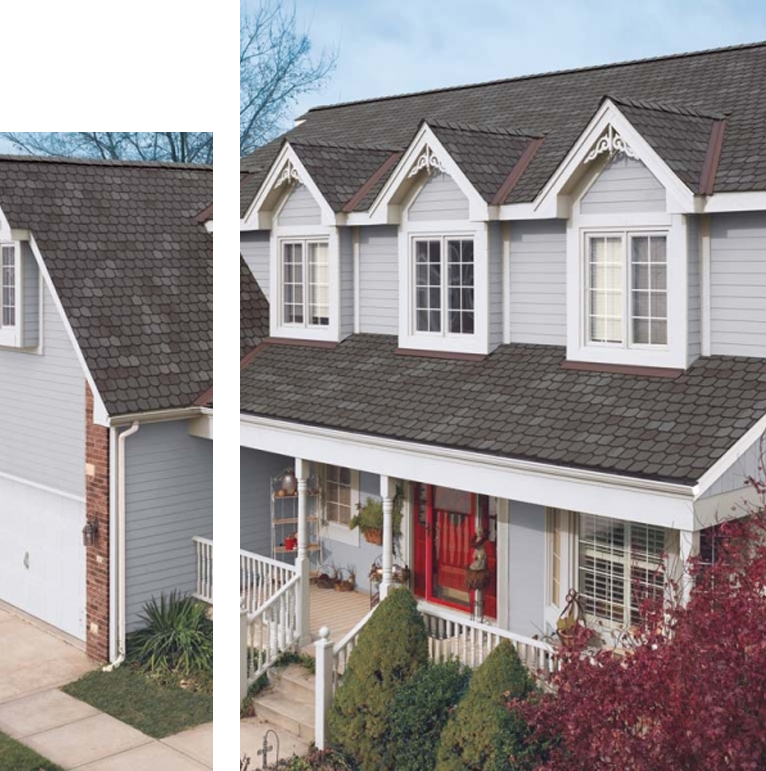
Lakewood’s median home build year is 1977, and the established residential neighborhoods that give the city its character, Applewood, Bear Creek, Green Gables, Eiber, Friendly Hills, were built out primarily in the 1960s and 1970s. These are the ranch homes and split-levels that have defined western Denver’s suburban landscape for more than half a century.
A home built in 1968 or 1974 is not approaching its first replacement. It is approaching its second or third. The question for homeowners in those neighborhoods is not whether the roof is original, it never is. The question is whether the current installation was done correctly, whether ventilation was addressed the last time someone was up there, and whether the previous contractor took shortcuts that are now starting to show.
Homes from this era also carry a consideration worth flagging before tear-off begins: pre-1978 construction frequently involves asbestos-containing material in older underlayment layers. Colorado law requires an inspection and certified removal before re-roofing when asbestos is present. For a city where a meaningful portion of the homes were built before 1978, this is a routine part of the job on older homes, not a surprise that stalls a project mid-schedule. A contractor who has worked Lakewood’s established neighborhoods knows to account for it from the start.
Most Lakewood Calls Start with Hail Damage or a Roof That Has Run Its Course
The first is storm or hail damage. Given Lakewood’s position in the foothills storm corridor and three major documented hail events since 2009, this is where most conversations start. Hail damage is often not visible from the ground, and in Lakewood it sometimes goes undetected for months, especially on homes where the storm hit overnight. Granule loss, shingle bruising, cracked pipe jacks, and bent flashing all require a roof-level inspection to document properly.
That One Construction Co. will meet your insurance adjuster on-site, document what we find, handle the estimate submission, and stay with the claim through reinspections and disputes if the initial settlement comes in short. We have staff whose job every day is talking with insurance companies. Separate wind and hail deductibles are common in Colorado policies, and those deductibles are often a percentage of the home’s insured value rather than a flat dollar figure. Knowing what your policy covers before you file is worth a conversation. If a storm came through Lakewood and you are not sure what your roof looks like, call us for a free inspection.
The second reason is age. A roof installed on a Lakewood ranch home in the late 1980s or 1990s is at or past the end of its rated lifespan. Architectural shingles are rated for 25 to 30 years. At 5,518 feet, with Lakewood’s UV exposure and wind load, that timeline can run shorter than the warranty suggests. We use the same threshold insurance companies use: we do not recommend replacement unless the damage or age warrants it. If a roof repair is the right call, we will say so, even when it means walking away from a replacement job.
What the Foothills Storm Corridor and Chinook Winds Do to a Lakewood Roof
Western Lakewood sits directly adjacent to the foothills, closer to the mountain front than most large suburban cities in the metro. When storms form near Evergreen or descend through the terrain west of the city, they hit the western Lakewood neighborhoods at or near their peak before spreading east. The 2017 supercell followed exactly that path. The foothills position that gives Lakewood’s western neighborhoods their character and their views is also what puts those roofs on the front end of the storm corridor.
The Front Range averages 7 to 9 hail days per year, with peak activity in May and June. At Lakewood’s elevation of 5,518 feet, hailstones have less atmosphere to fall through before impact. They arrive with more force than the same storm produces closer to sea level. Eastern Colorado regularly sees stones 1 to 2 inches across during severe events. The 2017 storm produced stones nearly three inches in diameter over parts of Lakewood.
Chinook winds are a separate and real factor. These downslope winds descend from the Rockies and hit the western suburbs with sustained gusts that can exceed 60 mph, particularly in winter and early spring. Shingles installed to a minimum-code wind standard for calmer conditions will not hold up the same way as shingles installed with the foothills exposure in mind. The installation standard matters as much as the material.
How Lakewood's Permit Process Works for Roof Replacements
Lakewood requires a city contractor registration before any work-for-hire can be performed within city limits. The city states it plainly in its official roofing handout: any person hired to perform work must have a current City of Lakewood contractor registration before pulling a permit. Registration is annual and must be in place before a permit application is submitted through the city’s eTRAKiT portal. There is no walk-in option. All permit applications are submitted electronically, required before tear-off and installation begin.
A permit is required for any re-roof or roof repair. The threshold is 100 square feet: repairs under that area do not require a permit. For anything above it, the permit must be pulled and approved before work starts.
Lakewood’s inspection structure for standard asphalt shingle work requires one inspection: a final roof inspection after the installation is completed. A mid-roof inspection, the kind that requires a stop after tear-off and before new shingles go down, applies only to tile and metal roof systems, not to standard asphalt re-roofs. For contractors working high-volume claim jobs in Lakewood after a major storm event, that single-inspection structure keeps scheduling manageable.
The city adopted the 2021 International Residential Code effective June 30, 2023. A few of the code details worth knowing: ice and water shield is explicitly not required in Lakewood, one of the clearest exemption statements in the region’s roofing codes. For low-slope roofs below 4:12, a double layer of felt is required, and ice and water shield may substitute for the double felt layer in that condition. Minimum slope for asphalt shingles is 2:12, with any exception requiring written approval from the Building Official and manufacturer specifications. Metal drip edge is required, extending at least a quarter inch below the sheathing and two inches onto the roof deck. Roof snow and live load minimum is 30 psf.
That One Construction Co. holds the required Lakewood contractor registration, pulls the permit, and handles inspection scheduling through to the final sign-off.v
What to Look for in a Lakewood Roofing Contractor
Joe Huber has been in construction since 1996, and before That One Construction Co. focused on exterior contracting, he built homes from the ground up. That background changes what he sees when he walks a Lakewood property. A roofer who only knows one trade looks at the shingles. Someone who has built houses looks at the attic ventilation, the drainage at the foundation, how the flashing integrates with the wall system, and whether the existing installation addressed the things that actually make a roof last. The established homes in Lakewood’s older neighborhoods carry decades of history in their assemblies, and the contractor who inspects carefully before proposing anything is the one worth calling.
That One Construction Co. has staff dedicated entirely to insurance company communication, every day. About 80 percent of what we do is insurance claim work. We meet the adjuster on-site, document the damage, handle the estimate submission, and stay with the claim through any dispute or reinspection. Colorado’s separate wind and hail deductibles catch many homeowners off guard, and the adjuster’s first settlement offer is not always the right one. Having someone who handles insurance claims daily, and who knows Lakewood’s documented storm history, matters when you are working through that process.
That One Construction Co. is privately owned. No private equity investors, no outside fund with margin requirements to protect. The roofing industry has seen significant PE consolidation in recent years, and the incentive for a PE-owned company is volume and efficiency, not the installation standard on a specific job. We are building something different on purpose, and the crew we have reflects that. Many of them came from PE-acquired companies for exactly that reason.
Your Lakewood Roofing Company
That One Construction Co. serves Lakewood and the surrounding area, including Golden, Wheat Ridge, Arvada, Denver, Englewood, and Littleton. If you are dealing with storm or hail damage, a roof that has reached the end of its run, or you just want a roofer near you who will give you a straight answer on what you actually need, call us for a free inspection. We will come out, get on the roof, and tell you what we find.
That One Construction Company
Lakewood, CO
Lakewood, CO ZIP Code: 80123